The Archaeological Museum in Florence
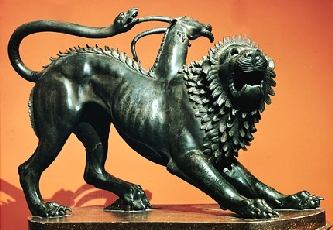
Archaelogical Museum - Chimera
Like many other Florentine museums, the Archaeological Museum stems from the collections of the Medici and Lorraine families that were initally exhibited along with other treasures in the Uffizi Gallery and moved to the Palazzo della Crocetta, the present day seat of the Museum, in 1888 (the building was erected in 1620 by Giulio Parigi). The main core of the collection focuses on Etruscan civilisation that interested in particular Cosimo the Eldest of the Medici family. But it "was the Grand Duke Cosimo I who to put together the currently existing collections in 16th century, though these were later increased by his successors (and in particular by Cardinal Leopoldo). Over time the collection was enriched with famous -works like the Chimera ofArezzo, the Minerva of Arezzo and the Orator. The collection was then continued by the Lorraine family that added the extraordinary collection of Egyptian pieces, besides adding new pieces to the Etruscan section, which was organised by series and studied by the scholars of the Lorraine court. Additions continued also during the 19th century with important works like the Sarcophagus of the Amazons and the Larthia Seianti. It -was at this time that a new section of Etruscan topography was created and that the Etruscan sculptures and small and large bronzes were added. In addition to the above-mentioned works, it is worth setting some time aside to visit the section dedicated to the lavish assortment of Etruscan jewels.
The Egyptian Museum
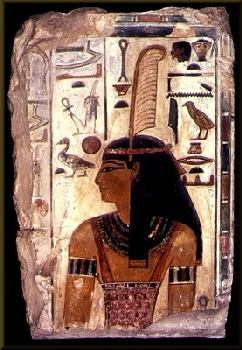
Egyptian Museum - Maat
The Egyptian Museum, which is second only to the famous museum in Turin, takes up some of the rooms of the Archaeological Museum. The first group of Egyptian antiquities was put together m the 17th century to include also pieces that had been collected by the Medici, although it was significantly increased during the 18th century by Leopoldo II, Grand Duke of Tuscany, who purchased new collections and financed, together with Charles X, King of France, a scientific expedition to Egypt in the years between 1828 and 1829. The expedition was directed by Jean Francois Champollion, the famous scholar and interpreter of hieroglyphics and by Ippolito Rosellini from Pisa, who -would soon become the father of Egyptian studies in Italy and a friend and disciple of Champollion. After the return of the expedition, the numerous objects collected during the expedition and during excavations of archaeological sites or purchased by local merchants, were equally divided between Florence and the Louvre. The Egyptian Museum of Florence was officially established in 1855. In 1880 the Piedmontese Egyptian scholar Ernesto Schiaparelli, who was to become the director of the Egyptian Museum of Turin, was assigned the task of transferring and organising the Egyptian antiquities in the present day location, which is also the seat of the Archaeological Museum. Schiaparelli suitably increased the collections of the Museum with objects found during his personal excavation campaigns and purchased in Egypt before his final transfer to Turin. The last group of works acquired by the Egyptian Museum of Florence includes pieces donated to the State by private contributors and scientific institutions. Today the Museum exhibits over 14,000 pieces, displayed in nine rooms and two warehouses. The exhibition rooms have been totally renewed. The old layout of Schiaparelh has now been replaced by a new one arranged, when possible, according to a chronological and topographic order. The collection comprises material that ranges from the prehistoric age down to the Age of Copta, with several groups of steles, vases, amulets and bronze pieces of different ages. The most remarkable pieces are some statues dating back to the age of Amenofi III, the chariot of the 18th dynasty, the pillar of the tomb of Sety I, the cup of Fayence with square mouth and the belongings of the wet nurse of the daughter of Pharaoh Taharqa, the woman portrait of Fayum, the collection of fabrics belonging to the Copt Age and an important group of chalk moulds dating of the end of the 19th century .. from Museums and Galleries of Florence and surroundings ( Apt - Florence )
Archaeological Museum ... More information ..
Archaeological Museum
Our most requested apartments in the Florence historical centre:
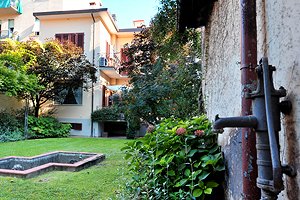 Holiday apartments in pretty villa on the southern outskirts of Florence, in the vicinity of Piazzale Michelangelo. Accommodation for groups of 4/6/8/10/12 people. Air conditioning, Internet connection. Just a few minutes from Florence historical centre.
More details
Holiday apartments in pretty villa on the southern outskirts of Florence, in the vicinity of Piazzale Michelangelo. Accommodation for groups of 4/6/8/10/12 people. Air conditioning, Internet connection. Just a few minutes from Florence historical centre.
More details
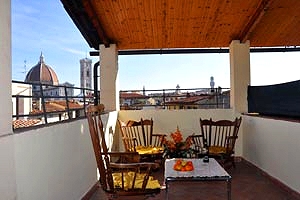 Beautiful apartment sleeping 6+2 in Florence historic centre, at a stone`s throw from Santa Maria Novella railway station. Air conditioning, Internet connection and panoramic balcony with view over the Duomo and the Medici Chapels.
More details
Beautiful apartment sleeping 6+2 in Florence historic centre, at a stone`s throw from Santa Maria Novella railway station. Air conditioning, Internet connection and panoramic balcony with view over the Duomo and the Medici Chapels.
More details
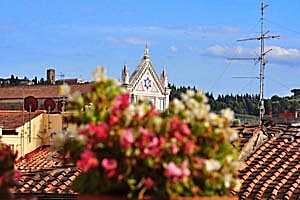 Apartment sleeping 2+1 in the heart of Florence historic centre, in the district of Santa Croce. Panoramic balcony with view over the basilica of Santa Croce, air conditioning, Internet connection, close to the most important Florentine monuments.
More details
Apartment sleeping 2+1 in the heart of Florence historic centre, in the district of Santa Croce. Panoramic balcony with view over the basilica of Santa Croce, air conditioning, Internet connection, close to the most important Florentine monuments.
More details
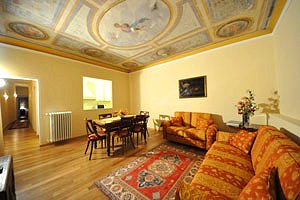 Apartment in the historical centre of Florence a few steps away from the Accademia Gallery. Nearby Piazza Duomo, Piazza Signoria, the Uffizi Gallery . 5+2 beds, Internet Connection and air conditioning.
More details
Apartment in the historical centre of Florence a few steps away from the Accademia Gallery. Nearby Piazza Duomo, Piazza Signoria, the Uffizi Gallery . 5+2 beds, Internet Connection and air conditioning.
More details