



The Botanical Gardens in Florence
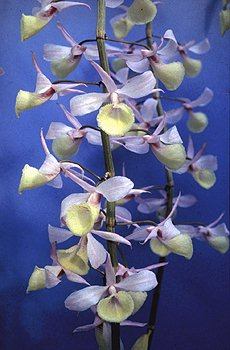
Botanical Gardens - Dendrobium aphyllum
The garden was improved and embellished with the 18th century collections thanks to the commitment of Cosimo III dei Medici who assigned its direction to the Florentine Botanical Society, under the direction of the famous botanist Pier Antonio Micheli. Its direction was transferred in 1783 to the Accademia dei Georgofrli and was referred to as Agricultural experimental garden, then renamed into Giardino dei Semplici in 1847 and finally into Botanical Garden of the Upper Education Institute in 1880.
The Gardens currently take up an area of 2.39 hectares, divided into smaller and larger avenues. The structure also has its own greenhouses and hot houses for the cultivation of special plants.
The vegetable patrimony is formed by over 5,000 examples with several very old tress, some of which, such as the Taxus baccata, planted by Micheli himself around 1720, a very large cork oak planted in 1805 and never stripped, several examples of Coniferae like the Araucaria, Torreya, Sequoia and a beautiful example of Metasequoia glyptostroboides, a species originally known as fossil and rediscovered in China only in 1941.
The most important collections are those comprising Cicadidae, Tillandsia, Orchids and ferns. Extremely interesting, because of its dimensions and number, is the collection of azaleas that always draws the attention of a large number of visitors during the flowering period. Even the sections dedicated to medicinal plants, cactuses and carnivorous plants are also very interesting from the didactic point of view. ... from "Museums and Galeries of Florence and Surroundings" (Apt Firenze)
Our most requested apartments in the Florence historical centre:
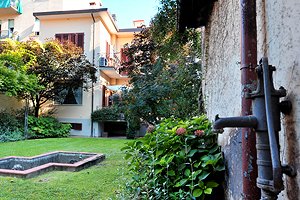 Holiday apartments in pretty villa on the southern outskirts of Florence, in the vicinity of Piazzale Michelangelo. Accommodation for groups of 4/6/8/10/12 people. Air conditioning, Internet connection. Just a few minutes from Florence historical centre.
More details
Holiday apartments in pretty villa on the southern outskirts of Florence, in the vicinity of Piazzale Michelangelo. Accommodation for groups of 4/6/8/10/12 people. Air conditioning, Internet connection. Just a few minutes from Florence historical centre.
More details
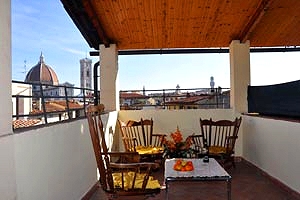 Beautiful apartment sleeping 6+2 in Florence historic centre, at a stone`s throw from Santa Maria Novella railway station. Air conditioning, Internet connection and panoramic balcony with view over the Duomo and the Medici Chapels.
More details
Beautiful apartment sleeping 6+2 in Florence historic centre, at a stone`s throw from Santa Maria Novella railway station. Air conditioning, Internet connection and panoramic balcony with view over the Duomo and the Medici Chapels.
More details
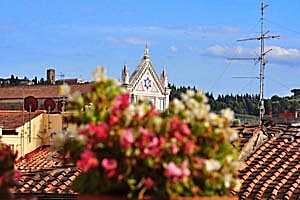 Apartment sleeping 2+1 in the heart of Florence historic centre, in the district of Santa Croce. Panoramic balcony with view over the basilica of Santa Croce, air conditioning, Internet connection, close to the most important Florentine monuments.
More details
Apartment sleeping 2+1 in the heart of Florence historic centre, in the district of Santa Croce. Panoramic balcony with view over the basilica of Santa Croce, air conditioning, Internet connection, close to the most important Florentine monuments.
More details
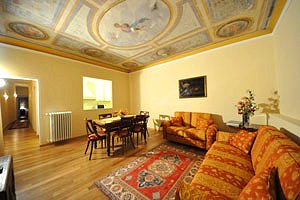 Apartment in the historical centre of Florence a few steps away from the Accademia Gallery. Nearby Piazza Duomo, Piazza Signoria, the Uffizi Gallery . 5+2 beds, Internet Connection and air conditioning.
More details
Apartment in the historical centre of Florence a few steps away from the Accademia Gallery. Nearby Piazza Duomo, Piazza Signoria, the Uffizi Gallery . 5+2 beds, Internet Connection and air conditioning.
More details