



The Opificio delle Pietre Dure in Florence
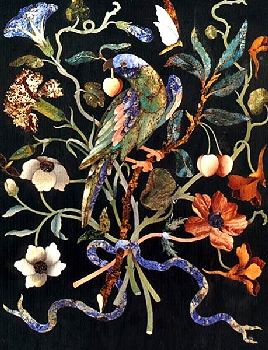
Florence - Opificio delle Pietre Dure
It was the passion of the Medici for this precious form of art that led Grand Duke Ferdinando I de` Medici to establish in 1588 a court laboratory specialised in semi-precious mosaics and inlays. This grand ducal institution, which remained active lor over three centuries, was the core of the Opificio delle Pietre Dure, established at the end of the 19lh century, which still has its seat in the original location chosen in 1798 for the laboratories formerly housed in the Uffizi.
The Florentine production was lavish and very prestigious and is today represented by the fine examples preserved both in Florentine and foreign museums. Yet, this small museum is the only institution that focuses only on this theme and offers therefore the opportunity of fully understanding this suggestive chapter of Florentine history. The collection is arranged by themes in chronological order. The first section is dedicated lo The first Grand dukes and semi-precious stones. This section displays porphyry sculptures dating back to the age of Cosimo I de` Medici, who had a special predilection for this ancient and precious material, enriched by sophisticated furniture pieces in semi-precious stones made for his sons Francesco I and Ferdinando I. The so-called "Florentine brand" dates back to this period, that is to the late 16th century. The brand, that would continue to be for centuries the pride of the laboratory, consists in a very-imaginative mosaic technique that used natural colours and precious stones, cut in sections and skilfully matched to form a larger image. "Stone painting" was the term chosen by its initiators to define Florentine mosaics, because this technique enables to represent a varying range of subjects, fully represented in the museum, ranging from portraits to abstract subjects, from landscapes to stories with figures, from architectural views to natural themes.
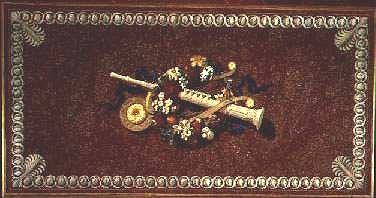
Opificio delle Pietre Dure - Table top
Opificio delle Pietre Dure ... read more .. Opificio delle Pietre Dure
Our most requested apartments in the Florence historical centre:
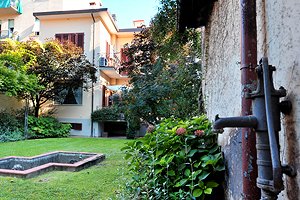 Holiday apartments in pretty villa on the southern outskirts of Florence, in the vicinity of Piazzale Michelangelo. Accommodation for groups of 4/6/8/10/12 people. Air conditioning, Internet connection. Just a few minutes from Florence historical centre.
More details
Holiday apartments in pretty villa on the southern outskirts of Florence, in the vicinity of Piazzale Michelangelo. Accommodation for groups of 4/6/8/10/12 people. Air conditioning, Internet connection. Just a few minutes from Florence historical centre.
More details
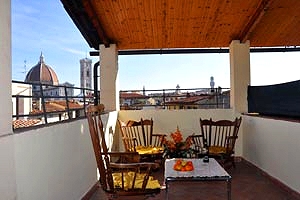 Beautiful apartment sleeping 6+2 in Florence historic centre, at a stone`s throw from Santa Maria Novella railway station. Air conditioning, Internet connection and panoramic balcony with view over the Duomo and the Medici Chapels.
More details
Beautiful apartment sleeping 6+2 in Florence historic centre, at a stone`s throw from Santa Maria Novella railway station. Air conditioning, Internet connection and panoramic balcony with view over the Duomo and the Medici Chapels.
More details
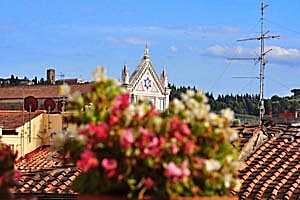 Apartment sleeping 2+1 in the heart of Florence historic centre, in the district of Santa Croce. Panoramic balcony with view over the basilica of Santa Croce, air conditioning, Internet connection, close to the most important Florentine monuments.
More details
Apartment sleeping 2+1 in the heart of Florence historic centre, in the district of Santa Croce. Panoramic balcony with view over the basilica of Santa Croce, air conditioning, Internet connection, close to the most important Florentine monuments.
More details
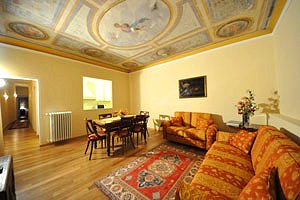 Apartment in the historical centre of Florence a few steps away from the Accademia Gallery. Nearby Piazza Duomo, Piazza Signoria, the Uffizi Gallery . 5+2 beds, Internet Connection and air conditioning.
More details
Apartment in the historical centre of Florence a few steps away from the Accademia Gallery. Nearby Piazza Duomo, Piazza Signoria, the Uffizi Gallery . 5+2 beds, Internet Connection and air conditioning.
More details