



Florentine Paintings and Sculptures

To our eyes, bidimensional Romanesque paitings are naive; the characters have unrealistic features. This is due not only to the pictorial techniques of the time, but also to the fact that the artists wanted to convey the detachment of the protagonists of frescos and mosaics from earthly things. These characteristics remained unaltered until the beginning of Renaissance.
In Gothic art the reproductions of the human figure were more realistic. Nonetheless, this was not a real revolution. Renaissance art developed in Florence but it took some time to its principles to spread all over Tuscany and even in Florence those artists linked to the Gothic style continued to be offered many jobs.
Apart from artists, the real protagonists of art in the Renaissance were the clients. They were mainly leading personalities in the economic and political field who could impose their taste to the artists they hired. The Medici family, in particular, played a very important role in the history of Florentine art.
Public personalities began to commission works for their residences, thus contributing to the development of new subjects, such as busts snd portraits of leading personalities, battle scenes and allegories of classical mythoogy.
In the Renaissance, painters and sculptors, who so far had been considered simple artisans, began to be considered real artists.
Our most requested apartments in the Florence historical centre:
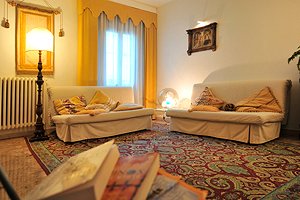 Elegant apartment in Florence historical centre situated in a 17th-century building in the Oltrarno district, just a few steps from Piazza Santo Spirito and Ponte Vecchio. Air conditioning, Internet connection, parking. From 2 to 7 sleeping accommodations.
More details
Elegant apartment in Florence historical centre situated in a 17th-century building in the Oltrarno district, just a few steps from Piazza Santo Spirito and Ponte Vecchio. Air conditioning, Internet connection, parking. From 2 to 7 sleeping accommodations.
More details
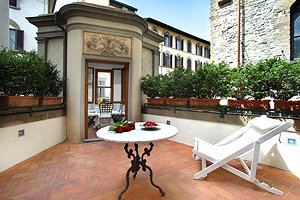 Luxury holiday apartment in Florence historical centre, in the Oltrarno district. 2/4 sleeping accommodations, Internet connection, panoramic terrace.
More details
Luxury holiday apartment in Florence historical centre, in the Oltrarno district. 2/4 sleeping accommodations, Internet connection, panoramic terrace.
More details
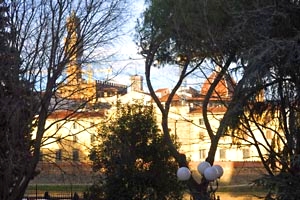 Apartment sleeping 4+1 in a historic villa along the Arno River, in Florence historic centre, near Ponte Vecchio and the Pitti Palace. Garden, panoramic balcony with view over Giotto's bell tower and Brunelleschi's dome, Internet connection, air conditioning.
More details
Apartment sleeping 4+1 in a historic villa along the Arno River, in Florence historic centre, near Ponte Vecchio and the Pitti Palace. Garden, panoramic balcony with view over Giotto's bell tower and Brunelleschi's dome, Internet connection, air conditioning.
More details
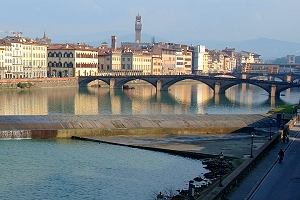 Apartments for rent in the Oltrarno zone near Piazza Santo Spirito in Florence. Apartments with accommodation from 2 to 11 people, air conditioning, TV, Internet
More details
Apartments for rent in the Oltrarno zone near Piazza Santo Spirito in Florence. Apartments with accommodation from 2 to 11 people, air conditioning, TV, Internet
More details